What the climate records say about the hill, and what the health authorities say about mould indoors.
Pena Palace above the forest in morning mist, from a drone
The short answer As of Sunday, 1 November 2026
Sintra is foggier and more humid than Lisbon. IPMA's 1971 to 2000 normals record 32 fog days a year at Sintra Air Base against 13.5 at Lisbon's Instituto Geofísico, and mean 9:00 UTC relative humidity of 81 percent against 76 percent. WHO says persistent damp and mould indoors should be avoided because they raise the risk of respiratory symptoms, allergies and asthma. It sets no numeric safe level, and calls for ventilation and temperature control to stop condensation. DGS advises ventilating the home at least 10 minutes a day, and while cooking, cleaning, drying laundry indoors and bathing.
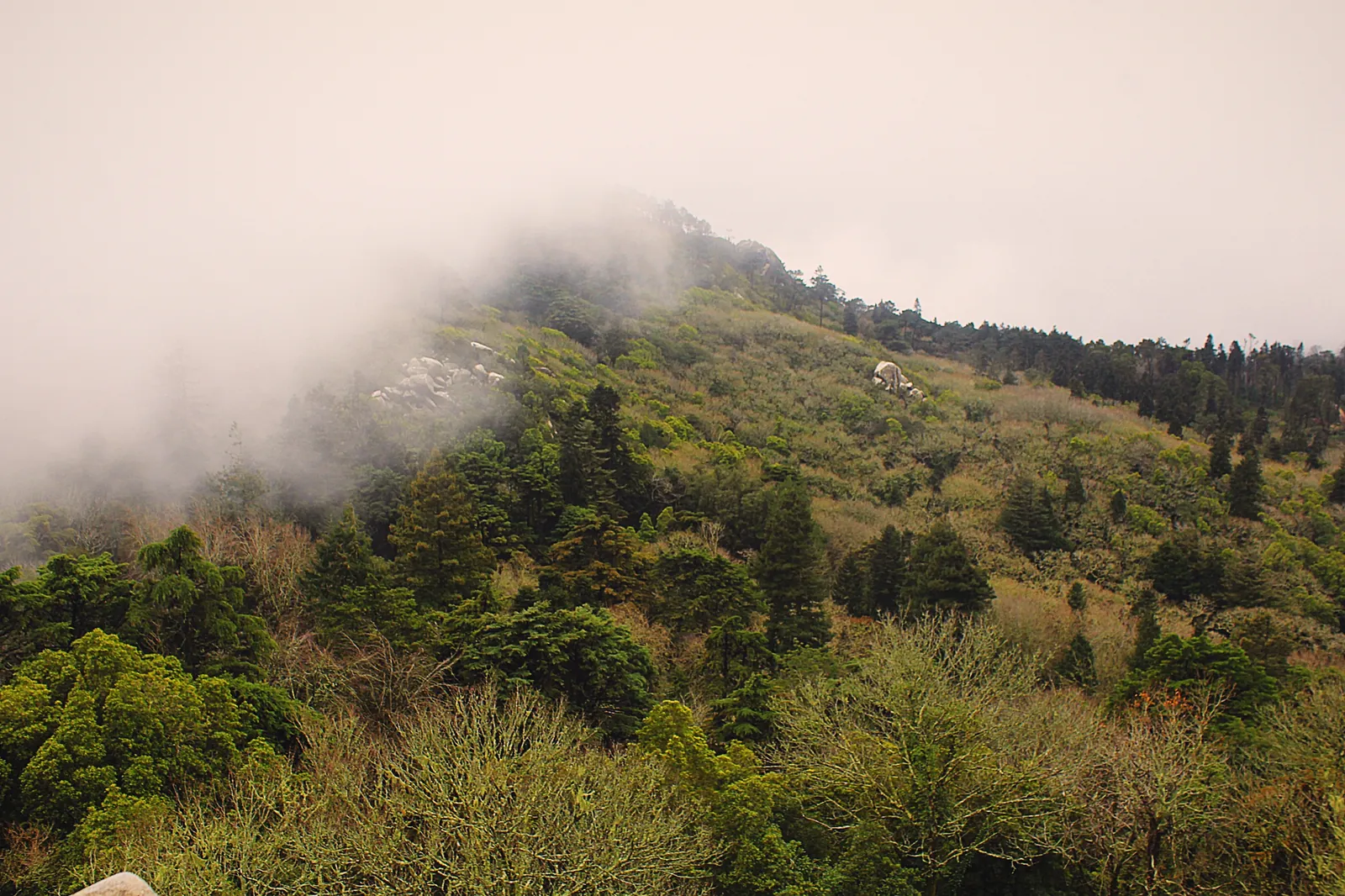
The Serra de Sintra wrapped in low cloud, seen from the Pena park · Photo: Dguendel, CC BY 4.0
01
IPMA 1971 to 2000 normals, Sintra Air Base (station 532, altitude 134 m): average 32.0 days of fog a year, with fog in every month (most in October, 3.7 days, and November, 3.6).
IPMA 1971 to 2000 normals, Sintra Air Base: mean relative humidity at 09:00 UTC of 81 percent for the year, 87 percent in January and December, 75 percent in July.
IPMA 1971 to 2000 normals, Lisboa Instituto Geofísico (station 535, altitude 77 m): 13.5 fog days a year, mean 09:00 UTC relative humidity 76 percent (86 percent in January and December, 67 percent in July), precipitation 725.8 mm.
IPMA 1981 to 2010 normals, Lisboa Instituto Geofísico: mean annual precipitation 765.8 mm, 75.3 days of 1 mm or more; wettest month November (127.5 mm).
WHO's 2009 guidelines say dampness is estimated to affect 10 to 50 percent of indoor environments in Europe and other regions, and that in settings such as river valleys and coastal areas dampness is substantially more severe than national averages.
WHO: the most important effects of building moisture and biological agents are increased respiratory symptoms, allergies and asthma, and disturbance of the immune system.
WHO: no quantitative health-based guideline values can be set for microbial contamination; dampness and mould problems should be prevented and, when they occur, remediated.
WHO: managing moisture needs proper control of temperature and ventilation to avoid excess humidity and condensation; cold surfaces such as metal window frames and poor insulation can cause condensation; ventilation should reach all spaces without stagnant zones.
WHO: building owners are responsible for a living environment free of excess moisture and mould; occupants are responsible for using water, heating, ventilation and appliances in a way that does not cause damp.
DGS: ventilate the home at least 10 minutes a day, and while cooking, cleaning, washing and drying clothes indoors, and during and after baths; the bathroom is the main source of humidity in the home.
DGS reported that the GERIA project's recommendations for elderly care homes include opening outside windows daily in all rooms and keeping relative humidity between 25 and 55 percent.
Castelo dos Mouros, Sintra, the walls and keep on the granite ridge · Photo: Ввласенко (Vvlasenko), CC BY-SA 3.0
Is Sintra really damper than Lisbon?
On IPMA's 1971 to 2000 normals, Sintra Air Base averaged 32 fog days a year against 13.5 at Lisbon, and 81 percent morning humidity against 76 percent.
DGS advises airing the home at least 10 minutes a day and while cooking, cleaning, drying laundry and bathing. WHO points to controlling temperature and ventilation to prevent condensation on cold surfaces.
WHO sets no numeric target. A DGS-reported project for elderly care homes recommended 25 to 55 percent relative humidity; whether that suits a family home is a question to check.